
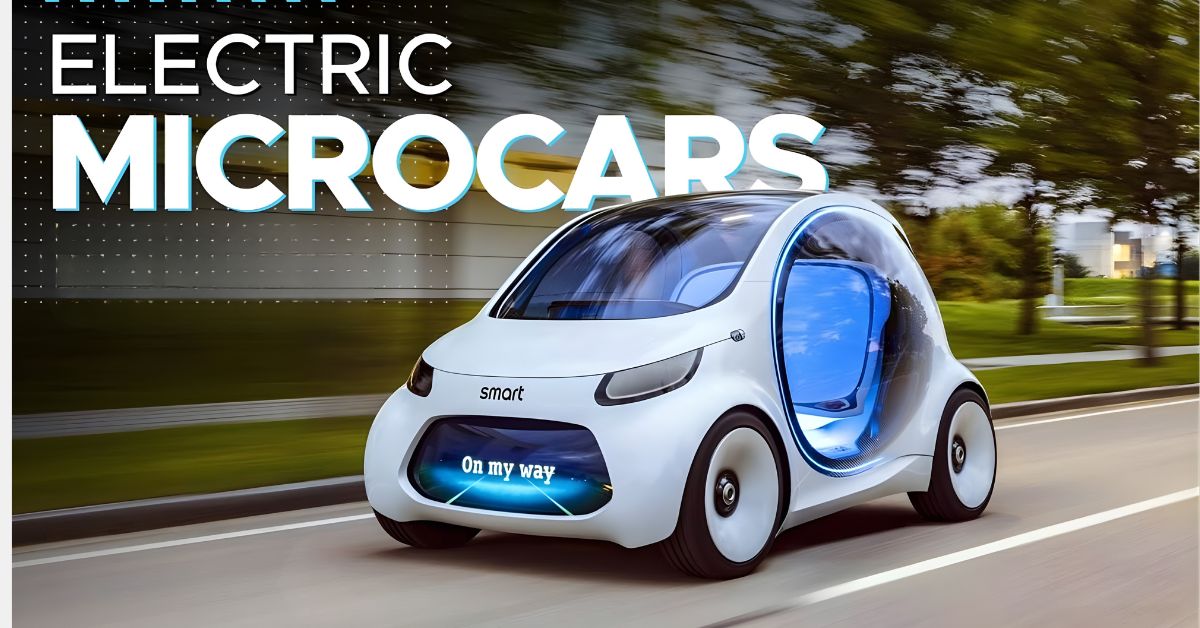
India is witnessing the start of a new automotive revolution. Forget the big SUVs and long sedans—2025 might be the year of the Microcar.
With traffic congestion worsening in metro cities like Bengaluru, Mumbai, and Delhi, a new category of vehicle is grabbing headlines. These are small, mostly electric, 2-seater vehicles designed strictly for city commuting. Recently, news about the Wings EV Robin (a made-in-India microcar) and the Swiss-designed Microlino has sparked curiosity across the country.
But what exactly is a microcar, and why are they suddenly trending in India? Here is everything you need to know about these tiny giants.
What is a Microcar?
A microcar is a vehicle that sits between a bike and a proper car. In technical terms, many of these fall under the L7e Quadricycle category. They are lightweight, compact (often under 3 meters), and usually have a top speed capped between 60 km/h and 90 km/h.
Unlike a standard car, they don’t need massive batteries or powerful engines because they are built for one purpose: short city trips. They offer the weather protection and AC of a car but the maneuverability of a scooter.
Read more: Maruti Victoris
Top Microcars Making News in India
1. Wings EV Robin (The Made-in-India Contender)
The biggest buzz right now is around the Robin, developed by Indore-based startup Wings EV.
- Launch Date: Expected around April 2025 (starting in Bengaluru).
- Price: Estimated between ₹2 Lakh to ₹3 Lakh.
- Key Features: It is a 2-seater electric vehicle that looks like a futuristic pod. It is as easy to drive as a car but takes up half the road space. It reportedly comes in three variants, with the top model offering AC and a 90 km range.
- Why it matters: It claims to solve the “single commuter” problem. Most cars on the road carry just one person. The Robin is built exactly for that user.
2. The Microlino (The Premium Bubble Car)
If the Robin is about utility, the Microlino is about style. This Swiss-designed electric car is famous globally for its “bubble” design, inspired by the classic BMW Isetta from the 1950s.
- Status: Reports suggest a potential India debut around 2026.
- Design: It has a unique front-opening door (you enter from the front!).
- Price: It is a premium product, likely costing ₹8 Lakh to ₹10 Lakh if brought as an import or CKD (Completely Knocked Down) unit.
- Vibe: It is being positioned as a lifestyle gadget, similar to an iPhone on wheels.
3. MG Comet EV (The Current Leader)
While not a “quadricycle,” the MG Comet EV kickstarted this trend in India. It is a proper car with safety airbags and highway capabilities but follows the “tall-boy, small footprint” philosophy. It has proven that Indians are ready to buy small, quirky electric cars for city use.
Why Are Microcars Trending Now?
1. The Parking Nightmare In cities like Delhi and Mumbai, finding parking is a daily war. A microcar can fit into tight spots where a Swift or Creta simply cannot. Some microcars allow “cross-parking” (parking perpendicular to the curb), saving huge amounts of space.
2. Rising Fuel Costs With petrol prices remaining high, the shift to electric mobility is natural. Microcars have very small batteries (often 5 kWh to 15 kWh), which means they charge fast (in 3-4 hours) using a standard home socket and cost mere paise per kilometer to run.
3. The “Second Car” Shift Families are realizing they don’t need two big cars. One SUV for highway trips and one Microcar for grocery runs or office commutes is becoming the practical choice for urban Indians.
The Challenges: Safety and Speed
Despite the excitement, there are concerns.
- Safety Perception: Can a tiny car survive a crash with a bus? While quadricycles pass specific safety tests, they are not built like tanks. Manufacturers are countering this by using roll-cage structures and limiting top speeds.
- Highway Ban: Most L7e microcars are not legal on expressways or high-speed highways. They are strictly for city limits.
- Social Status: In India, a “big car” is a status symbol. It will take time for people to accept that driving a tiny pod is “cool” and not a compromise.
Conclusion: What Happens Next?
The launch of the Wings EV Robin in 2025 will be the real test. If it delivers on its ₹2 Lakh price tag, it could disrupt the market, tempting bike riders to upgrade to a covered, AC vehicle. Meanwhile, premium options like the Microlino will target the fashion-conscious tech crowd.
As our cities get more crowded, the solution isn’t wider roads—it’s smaller cars. The microcar revolution is just beginning.
Frequently Asked Questions (FAQs)
Q1. Are microcars legal in India?
Yes, they are legal. Many are registered under the Quadricycle (L7e) category. However, they are generally allowed only for city use and prohibited from high-speed expressways.
Q2. What is the price of the Wings EV Robin?
The Wings EV Robin is expected to be priced between ₹2 Lakh and ₹3 Lakh, making it one of the most affordable electric 4-wheelers in India.
Q3. Can I drive a microcar on the highway?
Generally, no. Most microcars have a top speed of roughly 60-70 km/h and are legally restricted from using expressways for safety reasons. They are meant for city traffic.
Q4. What is the difference between a Microcar and the Tata Nano?
The Tata Nano was a full-fledged car with seating for 4. Microcars like the Robin or Microlino are often 2-seaters and are much smaller, lighter, and designed specifically for electric efficiency.
Q5. When is the Microlino launching in India?
While there is no official confirmed date, industry reports suggest the Microlino could enter the Indian market by 2026, likely positioned as a premium urban EV.

Leave a Comment
Your email address will not be published. Required fields are marked *